Bins
Juncta’s DEX is bin-based. Each trading pair is divided into discrete price ranges called bins. Each bin holds a defined amount of liquidity and executes swaps at a fixed price. At any moment, exactly one bin is the active bin and is the bin representing the current market price. Swaps execute within the active bin and move to adjacent bins when one is exhausted. Bins outside the current price range are inactive. Their liquidity is not used by the DEX.What happens when a bin goes inactive
When a bin transitions from active to inactive, the accounting layer designates its liquidity as available for borrowing. Borrowers can now borrow against that liquidity. Interest begins accruing to the LPs whose capital is being used. When price returns to a previously inactive bin, the DEX draws on the available liquidity buffer and the bin resumes executing swaps normally. The LP whose bin becomes active again resumes earning trading fees from that moment.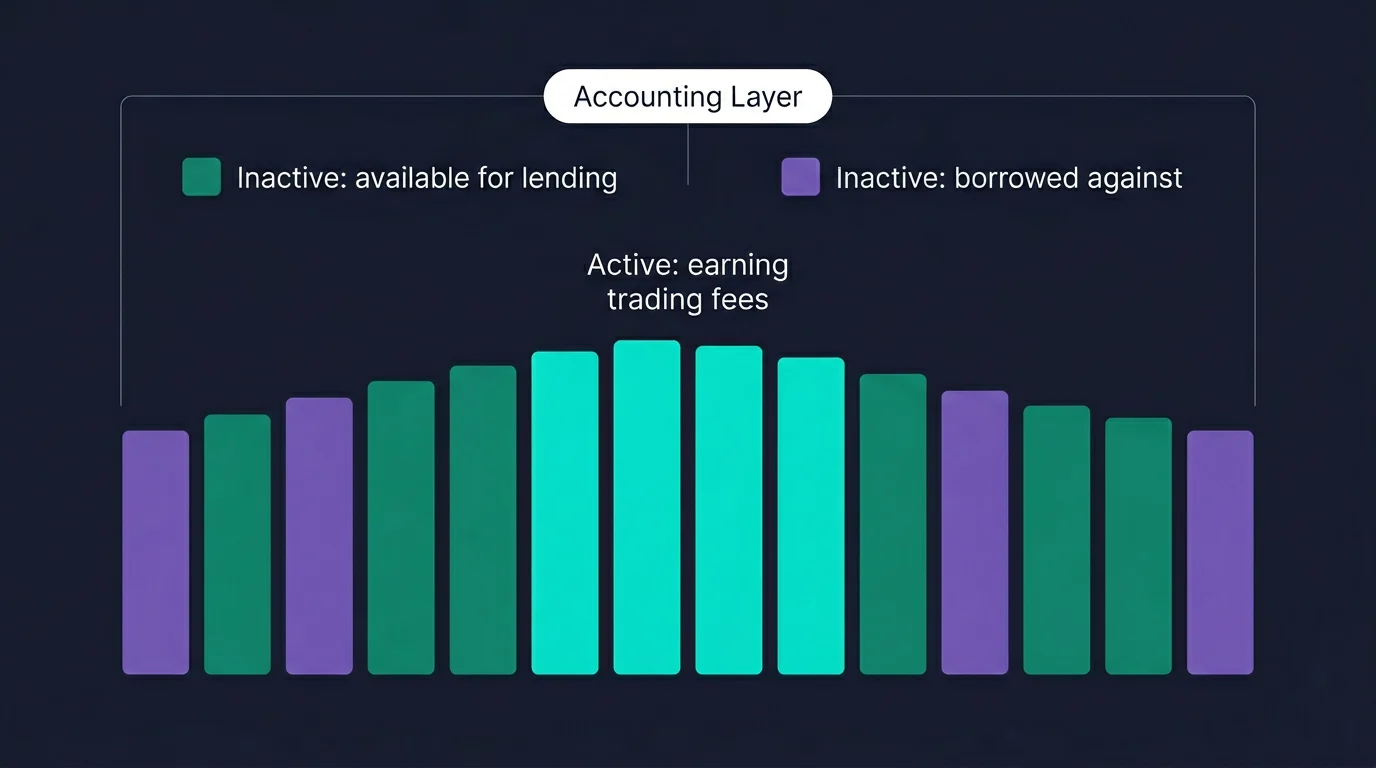
LP incentives on Juncta
An LP on Juncta earns from up to three sources depending on market conditions:- Trading fees when their bins are active
- Lending yield when their bins are inactive and borrowed against
- Protocol incentives where applicable
Juncta’s liquidity buffer
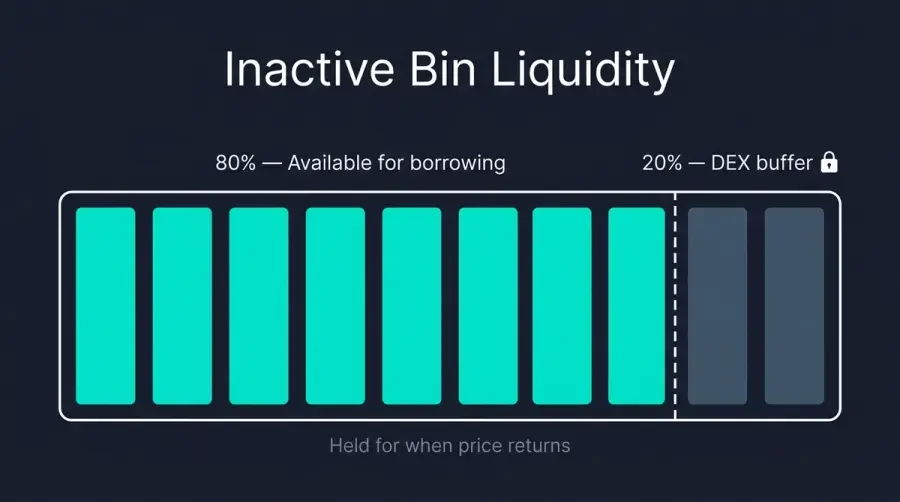
To ensure the DEX always has sufficient liquidity when price returns to a previously inactive region, Juncta enforces a utilisation cap at the pool level. At most 80% of inactive bin liquidity can be borrowed at any time. The remaining 20% is held as a buffer for DEX activity. Any borrow request that would push utilisation above 80% is rejected.